
Spout Pouches for Export: What Changes When Your Product Travels Overseas?
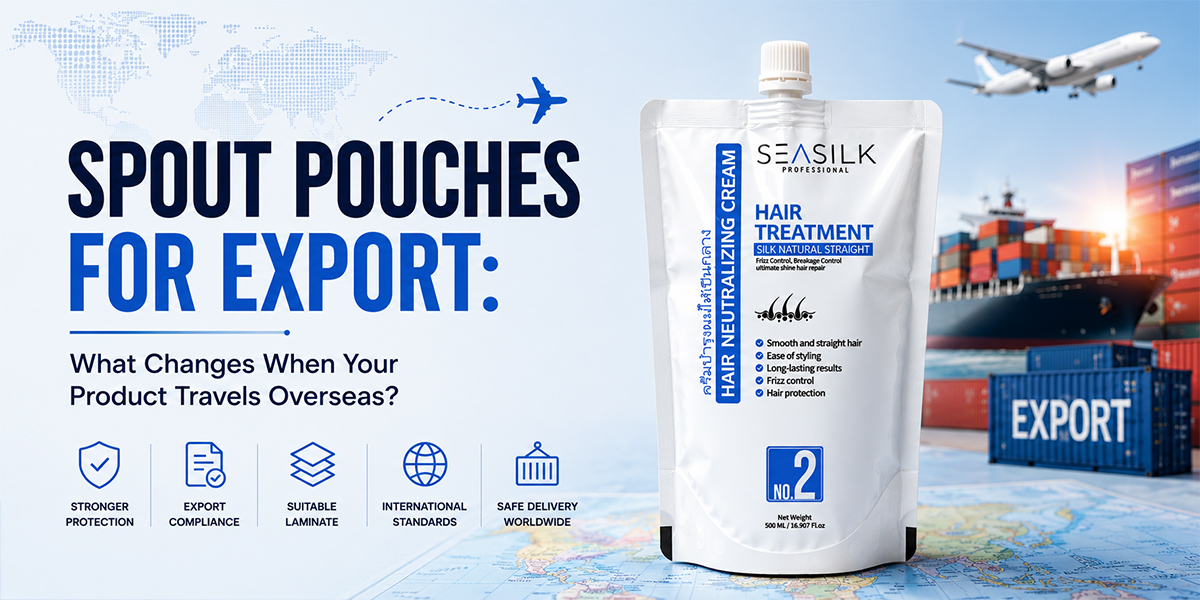
Packaging a product for your local market is one thing. Shipping it across countries or continents is another.
Export packaging has to withstand longer transit times, changing temperatures, multiple handling points, and different regulatory requirements. A pouch that performs well in domestic distribution may not always be suitable for international shipping.
If you’re planning to export liquid or semi-liquid products, here are a few packaging factors worth considering.
Shelf Life Becomes More Important
Products shipped overseas often spend weeks in transit before reaching distributors or retailers. During this time, the packaging needs to continue protecting the product from oxygen, moisture, light, and contamination.
Choosing the right laminate structure becomes even more important when products have a long distribution cycle or are stored in varying environmental conditions.
Related: Learn more about our Spout Pouches designed for food, beverage, personal care, and industrial applications.
Consider the Climate
Not every shipment travels under the same conditions.
A product exported to the Middle East may be exposed to high temperatures, while products shipped to colder regions can experience significant temperature changes during transport and storage.
Discuss your export destination with your packaging supplier so the pouch material and sealing performance can be matched to the expected conditions.
Check Local Packaging Requirements
Every country has its own packaging and labelling regulations.
Depending on your target market, you may need to consider:
- Food contact compliance
- Product labelling requirements
- Language regulations
- Recycling symbols
- Barcode and traceability requirements
Reviewing these requirements before production can help avoid delays or relabelling costs after shipment.
Test Before You Export
Export shipments involve more handling than domestic deliveries.
Before approving a packaging design, it’s a good idea to carry out performance tests such as seal strength, leak testing, and drop testing. These checks help confirm that the pouch can withstand transportation without compromising product quality.
Testing is particularly important for products shipped in large containers or over long distances.
Final Thoughts
A good export pouch does more than hold a product. It protects your brand throughout the supply chain.
By selecting the right laminate, understanding the destination market, and testing your packaging before shipping, you can reduce the risk of damage, leakage, and costly returns.
If you’re planning to export liquid products, working with an experienced packaging manufacturer can help ensure your spout pouches are designed for both your product and your destination market.
🔗 Suggested Internal Links
References
- Flexible Packaging Association (FPA)
- PMMI – The Association for Packaging and Processing Technologies
- Codex Alimentarius (General Food Labelling Guidance)
- ISO 22000 Food Safety Management Standards